
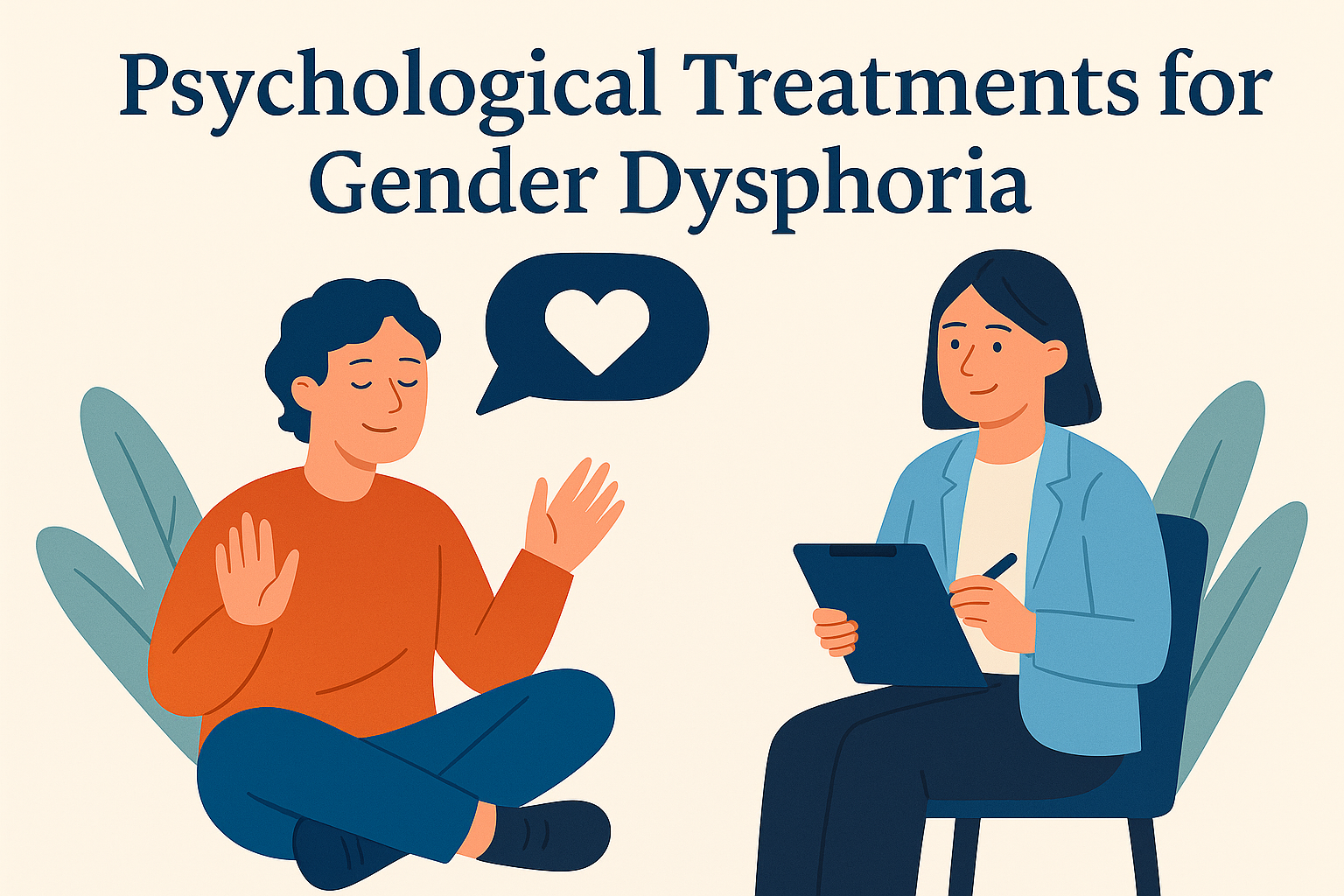
This guide breaks down how psychological treatments can support individuals experiencing gender dysphoria—without judgment, pressure, or one-size-fits-all approaches. It incorporates guidance informed by leading clinical standards, including the WPATH Standards of Care (SOC-8), and highlights well-regarded mental health directories such as Psychology Today and NQTTCN, helping you connect with affirming resources recognized by both clients and professionals.
Summary at a Glance
- Gender dysphoria refers to the psychological distress from a mismatch between gender identity and assigned sex at birth.
- Therapy can offer a safe, affirming space to explore identity without pressure.
- Modalities include gender-affirming therapy, CBT, psychodynamic methods, and group support.
- Choosing the right therapist means finding someone who listens, respects pronouns, and centers your voice.
- This guide offers trusted resources, therapist traits to look for, and practical first-step tools.
Gender dysphoria can feel like navigating a fog—filled with emotional weight, social pressure, and complex personal questions. But therapy isn’t about fixing you. It’s about helping you feel seen, supported, and safe to explore your identity on your terms.
This guide breaks down how psychological treatments can support individuals experiencing gender dysphoria—without judgment, pressure, or one-size-fits-all approaches. It incorporates guidance informed by leading clinical standards, including the WPATH Standards of Care (SOC-8), and highlights well-regarded mental health directories such as Psychology Today and NQTTCN, helping you connect with affirming resources recognized by both clients and professionals.
Understanding Gender Dysphoria & Why Therapy Matters
Gender dysphoria is not the same as being transgender. It refers specifically to the psychological distress caused by the incongruence between one’s gender identity and the sex assigned at birth. This distress can manifest in anxiety, depression, low self-esteem, or disconnection from one’s body.
Therapy helps create a safe space to unpack these feelings. You can learn more about our approach to affirming support on our Transgender Support page. You may be wondering, “Can I explore my gender without having to commit to anything?”—therapy says yes, and supports you at your pace. Whether you’re questioning your gender, considering transition, or simply seeking clarity—working with an affirming mental health provider can provide vital emotional grounding.
As a therapist at Collaborative Change Counseling, I’ve had the privilege of walking alongside clients as they navigate these deeply personal journeys. It’s not about directing the path, but holding the lantern while they choose their next step.
Exploring gender identity can be overwhelming—but you don’t have to do it alone. Talk with a therapist today.
What are the core modes of psychotherapy for gender dysphoria?
What is gender-affirming therapy?
Gender-affirming therapy is a supportive approach that validates your gender identity without imposing a specific outcome. This approach honors your identity without trying to mold or question it. Learn more about this on our Best Therapy for Gender Dysphoria page. Therapists help you process experiences related to gender while validating your lived reality. You set the pace—there’s no checklist or pressure to “decide” anything fast.
How can CBT and ACT support people with gender dysphoria?
Cognitive Behavioral Therapy (CBT) and Acceptance and Commitment Therapy (ACT) help reduce anxiety and promote self-acceptance by reshaping negative thought patterns and supporting values-driven decisions. CBT can address the anxiety, shame, or negative self-talk often tied to gender dysphoria. You might be asking, “Can therapy help me stop feeling so anxious about who I am?”—CBT and ACT offer strategies to rebuild how you relate to those thoughts and feelings. ACT (Acceptance and Commitment Therapy) supports values-driven decisions and emotional resilience, especially when facing external stressors like discrimination.
How do psychodynamic and exploratory therapies help with gender identity exploration?
These therapies explore deep-seated beliefs and past experiences, helping individuals understand how identity is shaped and processed emotionally. These therapies dive into the deeper narratives we carry. If you’ve ever asked, “Why do I feel so conflicted about my identity?”—psychodynamic approaches can gently uncover those buried beliefs. If your identity exploration is tangled in trauma, family expectations, or internalized norms, this method can help untangle those layers over time.
How does group therapy benefit individuals exploring gender identity?
Group therapy creates a sense of shared understanding and belonging, providing emotional validation through peer interaction and moderated discussion. Being in community with others facing similar experiences can be transformative. Moderated group therapy sessions create connection and normalize the gender journey.
What role does voice therapy play in gender-affirming care?
Voice therapy supports alignment between vocal expression and gender identity, reducing vocal dysphoria and improving confidence in daily communication. Voice therapy can help individuals align their vocal presentation with their gender identity. If you’re wondering, “Can changing my voice really make me feel more comfortable in my body?”—the answer is often yes, especially when that voice better reflects how you experience yourself. Though often associated with speech pathology, it carries psychosocial benefits and emotional relief when voice-related dysphoria is present.
Integrating Therapy with Medical & Social Care
Many people considering hormone therapy or surgical transition work closely with mental health professionals. Therapists often help with readiness assessments, letters of support, and navigating informed consent models.
With the latest WPATH Standards of Care (SOC-8), informed consent now places more emphasis on client autonomy and shared decision-making. This means fewer gatekeeping requirements and more trust in your self-knowledge.
But it’s not just about medical steps. Social transitions—like changing names, pronouns, or wardrobe—can be emotionally charged. A good therapist walks with you through these decisions with patience and affirmation.
Therapist Traits That Matter
From real reviews and lived experiences, here’s what clients say makes all the difference:
- Consistent use of correct names and pronouns—no excuses.
- Listening instead of pathologizing.
- Flexible, reliable scheduling and timely communication.
- No pressure to physically transition unless the client initiates.
- Trauma-informed sensitivity to how identity intersects with race, disability, and other identities.
- Lived or deeply informed understanding of non-binary journeys.
These aren’t just preferences—they’re signs of respect. When these traits are present, therapy can become a place of healing rather than harm.
Client Spotlight: Real Talk on Therapy Success
“I want to work with someone who truly listens, believes me, and never questions the validity of my feelings.”
“A space where I’m not pressured to transition or follow a checklist—just room to talk and figure things out on my terms.”
“Sessions that are focused on my needs, not the therapist’s assumptions or a manual.”
These real-life quotes reflect what many seek in therapy: presence, agency, and genuine care.
What to Do If Your Therapy Isn’t Working
It’s okay to switch therapists. If you feel invalidated, rushed, or misgendered—trust your instincts. A good fit is crucial. Seek referrals from LGBTQ+ centers, online communities, or directories like Psychology Today with affirming filters.
Not sure where to turn next? Collaborative Change Counseling offers affirming, trauma-informed therapy with professionals who truly listen. Schedule a free consultation to explore whether we’re the right fit for your journey.
The Right Support
If you’re seeking gender-affirming support, start here — or check out our Online Therapy services available to clients in Connecticut, NYC, and Massachusetts.
Connecticut
- Triangle Community Center:
https://www.ctpridecenter.org - Connecticut Transgender ID Project:
https://www.ctlegal.org/transgenderidproject
New York
- The Center (NYC):
https://gaycenter.org - Gender Spectrum:
https://www.genderspectrum.org
Massachusetts
- BAGLY (Boston Alliance of Gay, Lesbian, Bisexual, and Transgender Youth):
https://www.bagly.org - Massachusetts Transgender Political Coalition (MTPC):
https://www.masstpc.org
Preparing for Your First Session
First sessions usually include intake questions, paperwork, and a chance to share your goals. You don’t need all the answers—just honesty and openness. Write down what matters to you. Bring questions like:
- Have you worked with gender-diverse clients before?
- What’s your approach to gender-affirming care?
- How do you handle mistakes with pronouns?
A good therapist will welcome these questions and honor your courage for asking them.
Youth Note: Puberty Blockers & Early Support
If you’re supporting a young person navigating gender dysphoria, puberty blockers (GnRH analogs) may reduce distress by pausing physical changes. Therapy can play a vital role in informed, family-inclusive decisions and any subsequent care.
FAQs
1. How long does therapy for gender dysphoria take? Therapy timelines vary. Some find clarity in weeks, others over months. You set the pace.
2. What if I’m not sure about transitioning? Therapy isn’t about pushing a decision—it’s about creating space to reflect on what feels right for you.
3. Can I do therapy without involving my family? Yes, if you are over the age of 18. Your privacy and autonomy matter. Involvement is always based on your consent. If you are under the age of 18 parental consent is required, and your privacy and confidentiality still matter and can be discussed with your parents.
4. Do I need a diagnosis to start therapy? No diagnosis needed. You can begin therapy simply because you want a supportive place to explore.
5. What if I’ve had bad experiences before? You’re not alone. Keep looking—healing is possible with the right therapeutic fit.
Your Journey Deserves Respect
Navigating gender identity is deeply personal—and deserves care, not assumptions. If you’re seeking a space where your voice matters and your experience is held with respect, Collaborative Change Counseling is here.
Contact us today for compassionate, identity-affirming therapy that centers you.
By Jennifer Johnston, MA, LPC – trained in Mental Health Counseling and Behavioral Medicine
